
When a doctor advises a medical test, many people get confused by terms like blood test, imaging test, and screening test. They may sound similar, but each test serves a different purpose in diagnosing and preventing diseases. Understanding these tests can help you make informed health decisions and reduce unnecessary anxiety during medical check-ups.
What is a Blood Test?
A blood test is one of the most common medical tests used to check your overall health. In this test, a small sample of blood is taken from your vein and examined in a laboratory.
Blood tests help doctors understand how your body is functioning internally.
Common Reasons for Blood Tests
- Detect infections
- Check blood sugar levels
- Monitor cholesterol
- Evaluate liver and kidney function
- Identify vitamin deficiencies
- Diagnose anemia
- Monitor thyroid health
Common Types of Blood Tests
- Complete Blood Count (CBC)
- Blood Sugar Test
- Lipid Profile
- Thyroid Function Test (T3, T4, TSH)
- Liver Function Test (LFT)
- Kidney Function Test (KFT)
- Vitamin D & Vitamin B12 Test
Advantages of Blood Tests
- Quick and simple
- Helps detect diseases early
- Useful for regular health monitoring
- Often affordable and widely available
What is an Imaging Test?
Imaging tests create pictures of the inside of the body. These tests help doctors see organs, bones, tissues, or abnormalities that cannot be detected through blood tests alone. Imaging tests are especially useful for identifying injuries, tumors, fractures, infections, and organ-related problems.
Common Types of Imaging Tests
- X-Ray
- Ultrasound
- CT Scan
- MRI Scan
- Mammography
- PET Scan
Why Imaging Tests are Done
- Detect fractures or bone injuries
- Check pregnancy and fetal growth
- Identify tumors or cysts
- Examine internal organs
- Diagnose spine or brain conditions
- Detect lung diseases
Advantages of Imaging Tests
- Provides visual information
- Helps in accurate diagnosis
- Useful for surgical planning
- Detects structural abnormalities
What is a Screening Test?
A screening test is performed to detect diseases early, even before symptoms appear. These tests are usually recommended for healthy individuals based on age, gender, family history, or lifestyle risk factors. Screening tests play an important role in preventive healthcare.
Common Screening Tests
- Blood Pressure Check
- Diabetes Screening
- Cholesterol Screening
- Pap Smear
- Mammography
- Colon Cancer Screening
- Bone Density Test
- PSA Test for Prostate Health
Why Screening Tests are Important
- Detect diseases early
- Increase chances of successful treatment
- Reduce health complications
- Promote preventive care
Who Should Get Screening Tests?
- Adults above 30 or 40 years
- People with family history of diseases
- Smokers or alcohol consumers
- Individuals with obesity or inactive lifestyle
- Women during routine gynecological care
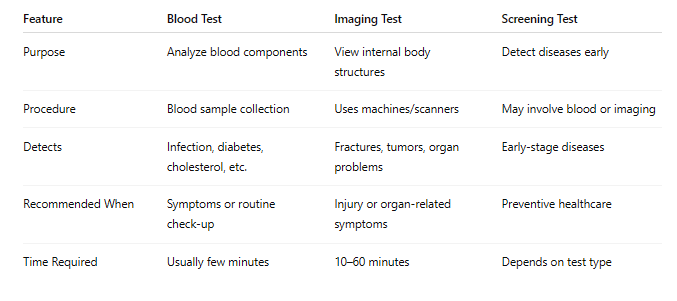
Difference Between Blood Test, Imaging Test & Screening Test
Which Test Do You Need?
The type of test depends on your symptoms and health condition.
- If you feel weakness or fever, your doctor may suggest a blood test.
- If you have pain, swelling, or injury, an imaging test may be required.
- If you are healthy but want preventive care, a screening test is recommended.
Sometimes, doctors may combine all three tests for a complete diagnosis.
Importance of Regular Health Check-Ups
Many serious diseases such as diabetes, hypertension, cancer, and heart disease can develop silently without symptoms. Regular health tests help in:
- Early diagnosis
- Better treatment outcomes
- Lower medical expenses
- Improved long-term health
Preventive healthcare is always better than emergency treatment.
Tips Before Undergoing Medical Tests
Before Blood Tests
- Follow fasting instructions if advised
- Drink enough water
- Inform the doctor about medications
Before Imaging Tests
- Remove metal objects
- Wear comfortable clothing
- Inform staff about pregnancy or allergies
Before Screening Tests
- Follow age-based screening schedules
- Share family medical history
- Avoid delaying regular check-ups
Blood tests, imaging tests, and screening tests are all important parts of modern healthcare, but they serve different purposes. Blood tests analyze body chemistry, imaging tests help doctors see inside the body, and screening tests detect diseases before symptoms appear.
Understanding these differences can help you stay proactive about your health and seek timely medical care when needed.
Raaya Diagnostic Center – Best Diagnostic Center in Moshi
If you are looking for accurate and reliable diagnostic services, Raaya Diagnostic Center is known for offering comprehensive pathology and imaging services with advanced technology and experienced healthcare professionals. The center provides blood tests, health check-up packages, ultrasound, imaging services, and preventive screening tests under one roof. With a focus on accuracy, hygiene, and patient care, Raaya Diagnostic Center has become a trusted choice for individuals and families seeking quality diagnostic services in Moshi.